FUEL KINGPARTS KING13584201FB Mechanical Pump 2.4L
fits model: Corona, Celica, 4runner. make: Toyota. year: 1982-81–1984.
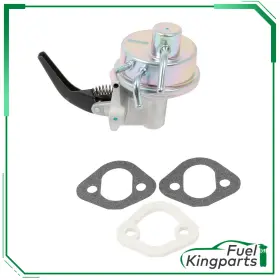
( Brand: Fuel Kingparts ), ( Type: Fuel Pump ), ( Fuel Type: Gasoline ), ( Placement On Vehicle: Engine Compartment ), ( Drive Type: Mechanical ), ( Manufacturer Warranty: 3 Years ), ( Items Included: Mounting Hardware ), ( Voltage: 12 V ), ( Flow Rate: 15 Gph ), ( In Tank Or External: External ), ( Outlet Type: Hose ), ( Pressure: 3-4.5 Psi ), ( Universal Fitment: No ), ( Oe/oem Part Number: M60416 ), ( Manufacturer Part Number: KING13584201FB )
Review FUEL KINGPARTS Toyota 1982 81 1983 2.4l Mechanical Pump fits CORONA CELICA 4RUNNER 1982-81–1984
Introducing the Fuel King Parts King13584201FB Mechanical Fuel Pump, specifically designed for various applications including the 1984 Toyota 4Runner, as well as the 1982-81 Toyota Corona and 1983-81 Toyota Celica with a 2.4L engine.
This mechanical fuel pump is meticulously crafted to ensure reliable and consistent fuel delivery to your vehicle's engine. The pump features a robust design, with a durable cast aluminum housing that resists corrosion and wear, providing long-lasting performance. The impeller, which is the heart of the fuel pump, is precision machined from high-quality materials to ensure optimal fuel flow.
The King13584201FB Mechanical Fuel Pump is easy to install, making it a popular choice among DIY enthusiasts and professional mechanics alike. It comes with all necessary hardware, including mounting brackets, gaskets, and bolts, for a hassle-free installation process.
This fuel pump is designed to meet or exceed OEM specifications, ensuring a perfect fit and function in your vehicle. It also undergoes rigorous testing to ensure compatibility with various fuel systems and to ensure it meets the highest standards of quality and performance.
With its proven durability, ease of installation, and commitment to meeting OEM specifications, the Fuel King Parts King13584201FB Mechanical Fuel Pump is an essential upgrade for any Toyota owner looking to maintain or restore their 1982-1984 Corona, Celica, or 4Runner with a 2.4L engine. Trust Fuel King Parts to provide you with the superior quality and reliability you deserve.
Pros and Cons of Buying a Mechanical Fuel Pump for a 1984 Toyota 4Runner, 1982-81 Corona, and 1983-81 Celica (2.4L)
Introduction:If you own a 1984 Toyota 4Runner, 1982-81 Corona, or 1983-81 Celica with a 2.4L engine, you might be considering purchasing a mechanical fuel pump, specifically the King parts K13584201FB. This article aims to help you make an informed decision by providing a list of pros and cons.
Pros:1. Durability: Mechanical fuel pumps, unlike their electric counterparts, have fewer moving parts, making them more durable and less prone to failure.
2. Reliability: Mechanical fuel pumps do not rely on electrical power to function, so they can continue to provide fuel even if the battery is dead or the electrical system fails.
3. Easy Installation: Mechanical fuel pumps are typically easier to install than electric ones, as they do not require any wiring or electrical connections.
4. Cost-Effective: Mechanical fuel pumps are often less expensive than electric ones, making them a cost-effective solution for older vehicles.
5. Improved Performance: A new mechanical fuel pump can improve the overall performance of the engine by ensuring a consistent fuel supply.
Cons:1. Noise: Mechanical fuel pumps can be noisier than electric ones, as they have more moving parts and create more vibration.
2. Complexity: Installing a mechanical fuel pump can be more complex than an electric one, as it involves removing the fuel tank and disassembling the fuel system.
3. Limited Flexibility: Mechanical fuel pumps cannot be easily modified or upgraded like electric ones, limiting their flexibility for those who might want to customize their vehicle's fuel system.
4. Potential Leaks: During installation or removal, there is a risk of fuel leaks, which can be messy and potentially dangerous.
5. Limited Availability: Mechanical fuel pumps for older vehicles like the 1984 Toyota 4Runner, 1982-81 Corona, and 1983-81 Celica may be harder to find and more expensive due to their limited availability.
Conclusion:When deciding whether to buy a mechanical fuel pump (King parts K13584201FB) for your 1984 Toyota 4Runner, 1982-81 Corona, or 1983-81 Celica (2.4L), consider the pros and cons outlined above. If durability, reliability, and cost-effectiveness are your primary concerns, then a mechanical fuel pump may be the best choice for you. However, if you value ease of installation, flexibility, or quiet operation, an electric fuel pump might be a better fit. Ultimately, the decision depends on your specific needs, budget, and technical abilities.
Recommendation:If you have the necessary skills, tools, and time, and you prioritize durability and reliability, then a mechanical fuel pump (King parts K13584201FB) is a solid choice for your 1984 Toyota 4Runner, 1982-81 Corona, or 1983-81 Celica (2.4L). However, if you prefer a quieter, easier-to-install option and are willing to spend a bit more, consider investigating electric fuel pump alternatives. Regardless of your decision, make sure to consult your vehicle's repair manuals, seek advice from experienced mechanics, and always prioritize safety when working on your vehicle.
Details:
Step 2:Disconnect the Fuel tank hose at pump and plug with a bolt or wood en dowel to keep any from flowing out. Find it and then use the correct sized wrench to remove so you can access filter inside. Also, disconnect the vapor-return hose if vehicle is equipped with one. Make sure the container you use is rated for Fuel.
Step 4:Disconnect the outlet line to carburetor. Look into the Fuel pump to see filter, which will look like a screen. Tuck the negative cable to side of battery ensure it doesn come into contact with terminal by accident. Many internal Fuel filters for these pumps cannot be removed.
Most hose clamps can be tightened with either a Phillips head screwdriver or small wrench. Once the clamps are loose, just pull line backward off of nozzle. Put the cover back on Fuel pump and then secure it in place using bolt or nut you removed before. The brush should be no wider than the body of Fuel pump.
Make sure that push rod is correctly installed in both the engine and Fuel pump. Mechanical Fuel pumps siphon from the gas tank. Remove any Fuel lines only if they re in the way. Put the attaching bolts through new pump and slip gasket over.
It then pushes it to the carburetor when engine is cranking or running. Locate the battery in vehicles engin or trunk. Reconnect any Fuel lines that you disconnected and use hose clamps to make sure they re tight. Cleaning Mechanical Fuel Pump Filters.
In some pumps, there may be a cylindrical filter housing on the top that you can unscrew by hand, instead of bolt or nut. Disconnect the negative terminal on battery. 5.Decreased Fuel Efficiency. Then slide the cable off.
3.Car Dies Under Heavy Load. Remove the central screw or nut from top of Fuel pump housing. A pair of one-way valves inside the pump only allow gas to move in one direction toward engine. Others may use pipe clips to hold the cover in place.
Gasoline can melt through some types of plastic. Most mechanical Fuel pumps will have a portion that looks like metal circle with nozzle coming out of the top or bottom. Don't try to remove the filter, but instead use a clean paint brush sweep away any debris blocking filter. Reassemble the Fuel pump.
You'll need to break or cut the zip ties when reconnecting lines. Locate the Fuel pump. Step 3:Carefully examine the old Fuel hose; if it is frayed or cracked, replace with new line hose. Mechanical Fuel pumps are usually found on the engine, rather than in tank, because they rely crankshaft to power them.
Newly Listed. Use a wrench to hold the Fuel pump fitting and tighten line nut with another. Use a wrench on the Fuel pump fitting and another line nut.
Use a medium sized paint brush to remove large and small bits of debris. If the push rod slides out, you can pack it with some heavy grease to hold in place while install pump. Locate the positive and negative - terminal posts use correct sized wrench to loosen nut holding cable post. If its difficult to connect, remove the other end of line from carburetor.
Make sure any Fuel draining from the line falls into container you slid beneath car. Tighten all clamps. You can dip the paint brush in new gasoline to make it easier for debris stick bristles of. Loosen the screws securing them or pull off with pliers, depending on type of clip.
Step 1:Disconnect the negative battery cable. Mechanical Fuel Pump Replacement Guideline. Connect the line to Fuel pump, and then reattach other end carburetor. Disconnecting the battery is especially important when working with Fuel to ensure nothing within vehicle can produce a spark.
It will look like a black box with two posts sticking out of it. 6.Increased Engine Temperature. Clean the filter with a brush without removing it. There are a host of issues that could prevent car from starting, but lack Fuel is one the first things to check.
Mechanical Fuel pumps use a lever that rides on the camshaft to pump rubber diaphragm inside up and down. Be sure to wipe up any gas that spills. Place a container beneath the vehicle to catch any leaking Fuel. Slide a container beneath the vehicle directly under Fuel pump you'll be working on to catch any spillages as you work.
This creates suction that pulls Fuel into the pump, and then pushes it along. 1.Car Won't Start.
part #: king13584201fb price
- $26.99
specifications pumpunite:
- for models: Corona, Celica, 4runner
- for makes: Toyota
- for years: 1982-81-1984
- brand: Fuel Kingparts
- type: Fuel Pump
- fuel type: Gasoline
- placement on vehicle: Engine Compartment
- drive type: Mechanical
- manufacturer warranty: 3 Years
- items included: Mounting Hardware
- voltage: 12 V
- flow rate: 15 Gph
- in tank or external: External
- outlet type: Hose
- pressure: 3-4.5 Psi
- universal fitment: No
- oe/oem part number: M60416
- manufacturer part number: KING13584201FB
shipping pumpunite:
- transit: 4-8 Days
- class: Standard
- service: Standard
- type: Fixed
- cost: $0.00
offer pumpunite:
- quantity: 10
- sold: 0
- best offers: True
- availability: In Stock
- started: June 5, 2025
- options: Ship-to-home
general pumpunite:
- condition: New
- Car Truck Parts Accessories > Air Fuel Delivery > Fuel Pumps Sending Units
seller pumpunite:
- rating: 99.6%
- city: Ontario, California
- # reviews: 2520
returns pumpunite:
- policy: Returns Accepted
- time: 30 Days
- paid by: Seller
payments pumpunite:
- wallet: Apple-pay
- credit card: Mastercard
- other
Fuel Kingparts KING13584201FB Is Similar To:
- Factory oem 17040-1la0a 170401la0a Fuel Pump Module Assembly With Sending For Infiniti 170401-la0a New (19.3% similar) Replacement part NUMBER:170401LA0A 170401LA0B SP4143M FG1645. Product features 1 manufactured with precision to meet oe standards IATF16949 certified. Easy installation: direct replacement for the non-functioning or broken Fuel pump, same performance as your original pump module, easy to install...(June 3rd, 2024)
- Volkswagen 3aa-919-050-l Genuine Fuel Pump Assembly (11.5% similar) All ford parts carry a two year unlimited mile warranty. Electrical parts are not returnable. Shipping carrier substitutions may be made at our determination in an attempt to reduce shipping cost the customer. Parts must be resalable and in the original packaging. All VW parts come with...(June 3rd, 2024)
- D w 141-100-0008 D w Remanufactured Stanadyne Fuel Pump Ds4 (11% similar) Engineered using the latest technology to ensure product lasts longer in service. Manufactured following strict oe standards to work like the original component. Remanufactured standing Fuel pump DS4: part number: manufacturer...(June 3rd, 2024)
- Top Autopart 601-225 For Ford Lincoln Mercury F-150 Transit-350 Hd Fuel Pump Relay Module 3.5 (30.3% similar) Before you purchase, make sure the photo showed is same as wanted.thanks. For ford E-250 2009 -2014. For ford E-350 2009 -2015. : features: best price high quality: direct replacement: long operating life stable performance: other part number: 601-225. Compatibility...(June 3rd, 2024)
- Sinocmp Re507959 Re527528 Fuel Injection Pump For John Deere Tractor 4045t 6068 Denso 294000-0059 (13.9% similar) Hitachi, Volvo, caterpillar, doesn, Hyundai, bloc etc. Reference number. Cooling system: radiator, hydraulic oil cooler, inter cooler. Dozier crawler 650J,700J,750J,764,850J. Engine parts: liner kit piston, pin, ring, liner , bearing main connect rod, gasket kit, injector...(June 3rd, 2024)
- Usdiyparts U11088901s Fits 2004 Mercury Mountaineer Ford Explorer V6-4.0l Fuel Pump Assembly E2355m (30.4% similar) DELPHI:FG0868. Manufacturer number. 3.BUYER pays return shipping. CORTEX:E2355M. Fitment chart. CARTER:P76125M. 1 x Fuel pump module assembly...(June 3rd, 2024)
- Chevrolet 323-00897 Fuel Pump 2.4l Vin 8th Digit Le5 Opt Nu1 Fits 10-12 Malibu (9.8% similar) Part #: Chevrolet 830710 for sale...(June 3rd, 2024)
- New-apf 323-58685 Fuel Pump Assembly Fits 99-00 Cr-v (11.5% similar) Part #: new-SPF 339217 for sale...(June 3rd, 2024)
- Usdiyparts U05313101s For Caravan Neon Sebring Stratus 1991-2007 Dodge Spirit E7030m Fuel Pump (29.1% similar) Fitment chart. Other part NUMBER:E7142M E7144M E7172M E7146M E7223M E7141M E7077M. Flow rate: 125 liters per hour. Pressure: 80-95 psi. 3.BUYER pays return shipping. For caravan neon Sebring stratus 1991 -2007 for dodge spirit E7030M Fuel pump package includes...(June 3rd, 2024)
- Autotecnica 24541whhc For 2011-2013 Infiniti M37 Fuel Pump Tank Seal 2012 (23.6% similar) Parts geek - for 2011 -2013 Infiniti M37 Fuel pump tank seal antigenic 24541WHHC 2012 2012 : review fitment notes to ensure proper fit condition: new brand: notes: 12 month warranty production: 01/01/2010-, in-tank, vehicle: 2011 . Fitment notes: vehicle: 2012 -2013 Infiniti M37. Fitment notes...(June 3rd, 2024)
- E-carpartstore Ec16359701s Mechanical Fuel Pump For Hummer H1 1993 M73105 Sp1143mp 42160 High Performance (24.8% similar) Boxes, APO/FPO or military mail box. 1 x Fuel pump module assembly. Manufacturer number. M73105,SP1143MP,42160,6472357. Fitment chart. Newly listed. Mechanical Fuel pump for hummer h1 1993 M73105 SP1143MP 42160 high performance package...(June 3rd, 2024)

1 offer $26.99 USD
- New. Offer #1 priced at $26.99 + $0.00 delivery = $26.99* total. . Mechanical Fuel Pump Replacement Guideline: Step 1:Disconnect the negative battery cable.FREE SHIPPING