BMW 16-11-7-377-482 Pressure Fuel Pump Lpfp Tank Module N63TU
fits model: 650, 550, 750. make: Bmw.
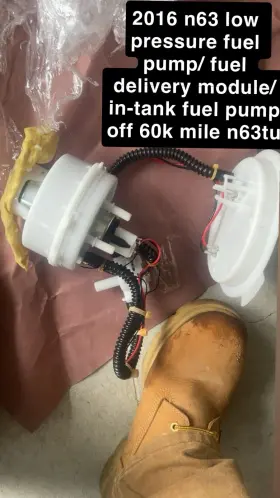
( Type: Fuel Pump ), ( Manufacturer Part Number: 16-11-7-377-482 ), ( Country/region Of Manufacture: Germany )
Review BMW Low Pressure Fuel Pump Lpfp In tank Delivery Module fits 650 550 750
The BMW LPFP (Low Pressure Fuel Pump) In-Tank Module with part number 16-11-7-377-482 and engine code N63TU is an essential component of the BMW fuel system. This high-performance fuel pump is specifically designed for BMW vehicles equipped with the N63TU engine, producing an impressive output of 550 hp and 750 Nm of torque.
This in-tank fuel pump is a key element of the BMW's fuel supply system, responsible for delivering fuel from the fuel tank to the engine under low pressure. Its compact design allows it to be installed directly in the fuel tank, minimizing the length and complexity of the fuel lines. This results in improved fuel efficiency and a more refined driving experience.
The LPFP In-Tank Module features a robust construction, ensuring reliable operation even under the most demanding driving conditions. It is engineered from high-quality materials, including corrosion-resistant components, to ensure longevity and durability.
The pump utilizes a sophisticated electronic control system that continuously monitors fuel pressure and flow rate, allowing for precise fuel delivery to the engine. This results in improved engine performance, increased fuel economy, and reduced emissions.
The BMW 16-11-7-377-482 N63TU LPFP In-Tank Module is easy to install, requiring minimal tools and technical expertise. It is designed to fit seamlessly into the existing fuel system, making it an ideal choice for DIY enthusiasts and professional mechanics alike.
In summary, the BMW LPFP In-Tank Module 16-11-7-377-482 with engine code N63TU is a high-performance, reliable, and efficient fuel pump specifically designed for BMW vehicles with the N63TU engine. Its compact design, robust construction, and advanced electronic control system ensure improved engine performance, increased fuel economy, and reduced emissions.
Buying a BMW N63tu 650 550 750 pressure fuel pump LPFP in-tank module can be a significant investment for BMW vehicle owners. This component is crucial for delivering fuel pressure to the engine, ensuring optimal performance. Here are some pros and cons to consider before making a purchase.
Pros:1. Improved Fuel Efficiency: A new LPFP module can help improve fuel efficiency by ensuring that the fuel is delivered evenly and at the correct pressure to the engine.
2. Better Engine Performance: The LPFP module plays a vital role in delivering fuel to the engine. A faulty or failing module can result in poor engine performance, misfiring, or even stalling. A new module can help restore engine performance to its original level.
3. Increased Reliability: A new LPFP module can help increase the reliability of the fuel system, reducing the likelihood of fuel delivery issues and potential engine damage.
4. Cost-Effective: While the upfront cost of a new LPFP module can be significant, the potential cost savings from improved fuel efficiency and reduced engine repairs can make it a cost-effective investment in the long run.
Cons:1. Upfront Cost: The cost of a new LPFP module can be high, especially for BMW owners, as these vehicles often require specialized parts.
2. Installation Complexity: Installing an LPFP module can be a complex process, requiring specialized tools and knowledge. It is recommended that the installation is done by a professional to ensure proper installation and function.
3. Potential for Additional Repairs: A faulty LPFP module can be a symptom of a larger fuel system issue. Replacing the module alone may not address the root cause of the problem, requiring additional repairs and expenses.
4. Risk of Damage During Installation: The fuel system is a delicate and complex system. During the installation process, there is a risk of damaging other fuel system components, which can result in additional repair costs.
Conclusion:In conclusion, a new BMW N63tu 650 550 750 pressure fuel pump LPFP in-tank module can offer significant benefits, including improved fuel efficiency, better engine performance, increased reliability, and potential cost savings in the long run. However, the upfront cost, installation complexity, potential for additional repairs, and risk of damage during installation are important considerations to keep in mind before making a purchase. Ultimately, it is recommended that BMW owners consult with a professional mechanic or BMW specialist to assess their specific situation and determine if a new LPFP module is the best course of action. If the decision is made to proceed with the purchase, it is recommended that the installation is done by a certified BMW mechanic to ensure proper function and minimize the risk of damage to other fuel system components.
Details:
N63tu 650 550 750 Low Pressure Fuel Pump Lpfp In-tank Delivery Module.
part #: 16117377482 prices
- $89.89-$400.00
specifications pumpunite:
- for models: 650, 550, 750
- for makes: Bmw
- type: Fuel Pump
- manufacturer part number: 16-11-7-377-482
- country/region of manufacture: Germany
seller pumpunite:
- # reviews: 4
- rating: 100.0%
- city: Plymouth, Massachusetts
general pumpunite:
- Car Truck Parts Accessories > Air Fuel Delivery > Fuel Pumps Sending Units
- condition: Used
returns pumpunite:
- policy: No Returns
payments pumpunite:
- other
- wallet: Apple-pay
- credit card: Mastercard
offer pumpunite:
- best offers: True
- options: Ship-to-home
- started: July 2, 2025
- availability: In Stock
- quantity: 1
- sold: 0
shipping pumpunite:
- type: Calculated
- class: Standard
- service: USPS Ground Advantage
- transit: 6-12 Days
- cost: $11.70
- carrier: USPS
Bmw 16-11-7-377-482 Is Similar To:
- Assenmacher Tools 73414hhpj For 1998-1999 Bmw 323is Fuel Pump Removal Tool (27% similar) 12 month warranty fitment notes: vehicle: 1998 -1999 bmw 323IS. Parts geek - for 1998 -1999 bmw 323IS fuel pump removal tool 73414HHPJ 73414HHPJ: review fitment notes to ensure proper fit condition: new brand: username tools notes: lock ring used remove and replace the in-tank fuel pump level...(June 4th, 2024)
- Orrigey Orr06517001x Fuel Pump Assembly For Bmw 525i L6 2.5l 530i 3.0l 545i 645ci V8 4.4l (24.7% similar) The fuel pump will hum for two to three seconds, if working properly. Fuel pump assembly for bmw 525I l6 2.5L 530I 3.0L 545I 645CI v8 4.4L package include. High pitched noises. New list item. If no sound is made, replacing the pump may be necessary. Reconnect the negative battery cable...(June 5th, 2024)
- Bmw 16117473444 G20 320i 330i 340i X G21 Fuel Pump And Level Sensor 17-19 Oem New (43.5% similar) 3' G20, 320I, sedan, B48C, Eur, 5F32: fuel pump and fuel level sensor. 3' G20, 320I, sedan, B48D, Eur, 5F71: fuel pump and fuel level sensor. 3' G20, 320I, sedan, B48D, Eur, 5F72: fuel pump and fuel level sensor. 3' G20, 320I, sedan, B48C, Eur, 5F38: fuel pump and fuel level sensor...(June 6th, 2024)
- Bmw 16117319502 Fuel Pump Assembly Gasoline 2.0l 28ix Awd Fits 13-17 X3 (37.5% similar) All other parts that may be provided are accessories and extra parts. Load is curbside delivery only. In some cases the images of part shown may be vehicle from which was pulled, or a generic image representing typical stock, rather than unique item being sold. Only parts internal to the engine...(June 6th, 2024)
- 323-50203r Passenger Fuel Pump Assembly And Sender Fits 07-13 Bmw 328i (35.2% similar) No expedited shipping is available. Top dollar paid for late model wrecks. 23 metres lane, new Windsor, ny 12553. Many luxury, SUV and exotic vehicles available...(June 10th, 2024)
- Am-motors2020 Am13346201s For Bmw 125i 120i 130i 135i 320i 323i 325i 325xi 330i 335i Fuel Pump Module (31.6% similar) Package include. For bmw 125I 120I 130I 135I 320I 323I 325I 325XI 330I 335I fuel pump module included features. Please search in the table of model's above to see if there is a suitable model ,make sure they match style, year, interior or others your car...(June 12th, 2024)
- Bmw 7616446 N54 n55 Engine 335i 535i X5 X6 Z4 E90 E60 High Pressure Fuel Pump 7616470 (41.4% similar) No equipment check whether it works or not. Please verify that it fits and is compatible with your specific car model before purchasing...(June 13th, 2024)
- Bmw 16-14-2-229-684 2001 2006 E46 M3 Fuel Pump Delivery Unit Module Assembly (51.5% similar) 2001 - 2006 bmw E46 m3 fuel pump delivery unit module assembly 16-14-2-229-684, this is an oem used part. Lock: E46 m3 set. No warranty on light bulbs. Damaged parts or lights' are sold as-is with no warranty. The part is in great used working condition with wear from...(June 14th, 2024)
- Bmw 16117341303 14-16 F10 5 6 Series Main Gas Fuel Tank Pump Supply Module Control Unit Oem (48.9% similar) Int color code: individual leather extended Amparo Brain pap 5. Item comes as seen in the pictures. Ext color code: black 2 L0668. Donor vehicle: this came off of a 2016 bmw F10 550XI. Vehicle had 113K miles...(June 15th, 2024)
- Bmw 7 584 461 2012-2018 320i High Pressure Fuel Pump 0261520282 Oem (39.7% similar) 2018 bmw 320I. There is no holding of items unless agreed upon. Mileage: 41274. Receipts are available upon request. First come first serve...(June 15th, 2024)
- Bmw 7616194 07-13 Oem Hpfp High Pressure Fuel Pump Engine N54 Parts Only (47.2% similar) High pressure fuel pump, not working, will go higher than 900PSI...(June 15th, 2024)

5 offers $89.89–$400.00 USD
- New. Offer #1 priced at $400.00 + $10.60 delivery = $410.60* total. This provides almost double the flow from a stock pump and should be more than enough for over 1200whp worth of low-pressure fueling regardless of fuel type. Spool Performance is proud to present the production version of our Stage 3 LPFP (Low-Pressure Fuel System) for the BMW F10 N63 platform.+$10.60 shipping
- Used. Offer #2 priced at $148.00 + $0.00 delivery = $148.00* total. These markings cannot be seen, and do not affect how the part functions or installs All of our electronic parts have special UV markings inside and out.FREE SHIPPING
- Used. Offer #3 priced at $89.89 + $0.00 delivery = $89.89* total. OEM Engine High Pressure Fuel Pump off from 2014 BMW F06 650Xi.FREE SHIPPING
- Used. Offer #4 priced at $69.92 + $0.00 delivery = $69.92* total. OEM Engine High Pressure Fuel Pump off from 2014 BMW F10 550Xi.FREE SHIPPING
- Used. Offer #5 priced at $79.89 + $0.00 delivery = $79.89* total. OEM Engine High Pressure Fuel Pump off from 2015 BMW F10 550Xi.FREE SHIPPING